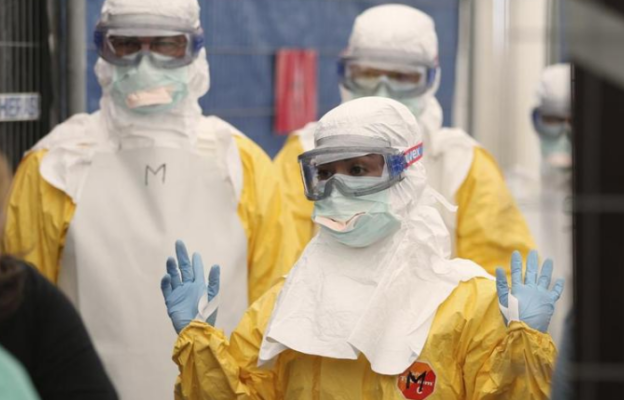
The death toll from the latest Ebola epidemic in the Democratic Republic of the Congo (DRC), the fastest spreading outbreak of the virus ever recorded, has surged above 1,000.
Jean Kaseya, director-general of the Africa Centres for Disease Control and Prevention, said at a health conference in Ghana on Wednesday that 1,031 deaths have been confirmed since the emergence of the Bundibugyo strain of the virus in May.
“These are people dying,” Kaseya said. “They are dying because we don’t have vaccines, we don’t have medicine, we don’t have funding.”
According to the World Health Organisation (WHO), two people have also died from the virus in neighbouring Uganda.
The DRC’s health ministry said that as of Monday, 2,473 cases had been confirmed in the latest outbreak of Ebola, which spreads via close physical contact and exposure to infected bodily fluids. At least 737 patients are currently in isolation or hospitalised, the ministry added.
ADVERTISEMENT
Read Also: DR Congo Launches Clinical Trial of Experimental Ebola Treatment
The DRC outbreak was declared on May 15 after several deaths were recorded in the northeastern province of Ituri.
Since then the death toll has risen faster than in any previous Ebola outbreak on record, including the 2013-2016 epidemic which was the largest and deadliest in history, with more than 11,000 deaths out of at least 28,000 cases primarily in West Africa across Guinea, Liberia and Sierra Leone.
That outbreak took about eight months to reach 1,000 deaths. The latest epidemic in the DRC has done so in less than 10 weeks.
Read Also
“The Ebola outbreak is escalating at an alarming pace. We must act now,” Kaseya wrote in a post on X on Tuesday. “If we do not stop it today, this will become the worst outbreak the world has ever documented.”
ADVERTISEMENT
The virus spreading in the DRC is Bundibugyo, which is the rarest of the four variants of Ebola known to affect humans and currently has no approved vaccines or treatments.
Thierno Balde, the World Health Organisation incident manager for Bundibugyo in the DRC, told reporters on Tuesday that despite efforts to contain the virus, “the outbreak remains ahead of us and we are still in a phase of catching up”.
Kaseya told the Accra conference on Tuesday that he had written to US Health Secretary Robert F Kennedy Jr to ask him to lift Ebola-related travel restrictions on Uganda since the country has not reported any new infections in more than a month.
Uganda’s last Ebola patient was discharged on July 16, beginning a 42-day countdown after which it can be declared free of the virus, according to WHO guidelines.
But the United States is restricting entry for all travellers who were recently in DRC and some travellers who recently visited Uganda or South Sudan.
ADVERTISEMENT
Al Jazeera