
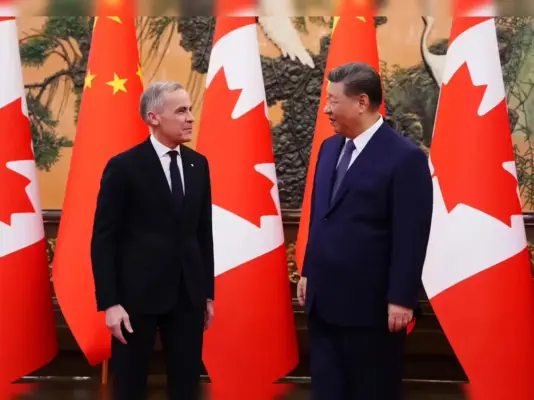
China has rejected claims that its new trade agreement with Canada is aimed at undermining the United States, insisting the deal is purely bilateral and not directed at any third country.
Beijing’s response came after Washington threatened to impose 100 per cent tariffs on Canadian exports if the agreement is implemented, warning that it could allow Chinese goods to enter the US market indirectly.
Under the preliminary deal, announced earlier this month, China is expected to lower tariffs on Canadian canola and grant Canadian citizens visa-free entry.
The agreement was unveiled during Canadian Prime Minister Mark Carney’s visit to Beijing, part of his efforts to recalibrate Canada’s foreign relations amid growing tensions with the US.
READ ALSO: Nigeria, China Sign Second Sub-Committee Minute, Deepen Cultural, Tourism Ties
Speaking at a press briefing on Monday, China’s Foreign Ministry spokesperson Guo Jiakun said the partnership with Canada was based on mutual benefit and cooperation.
Read Also
“China and Canada have established a new type of strategic partnership that does not target any third party,” Guo said. “China believes countries should pursue win-win cooperation rather than confrontation or zero-sum politics.”
The diplomatic exchange follows strong criticism from the United States over the weekend. President Donald Trump warned that the deal would open the door for China to “dump goods” into North America through Canada, prompting threats of sweeping tariffs on Canadian products.
On Sunday, Trump accused Beijing of “successfully and completely taking over the once great country of Canada” in a social media post.
US Treasury Secretary Scott Bessent echoed the concern, saying Washington could not allow Canada to become “a gateway for cheap Chinese goods” into the American market.
Canada and the United States have been locked in an ongoing trade dispute since the Trump administration imposed a series of import duties on Canadian goods, straining what has traditionally been one of the world’s closest economic relationships.