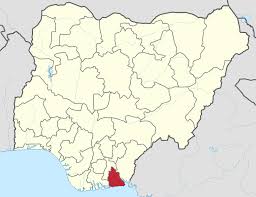
The government of Akwa Ibom State has rejected reports suggesting that oil wells attributed to the State may be returned to Cross River State, describing the claims as speculative and contrary to binding judicial decisions.
In a press briefing, the state said the Revenue Mobilisation Allocation and Fiscal Commission only received a draft report from a Federal Government inter-agency committee on 13 February 2026, stressing that the document does not constitute a decision, approved recommendation, or reallocation of oil wells.
The government referenced longstanding litigation between the two states, noting that in 2005 the Supreme Court of Nigeria ruled in favour of Cross River only on aspects of the northern boundary dispute, while dismissing its claims over the southern estuarine territory where the oil wells are located.
It added that the apex court relied on the 10 October 2002 judgment of the International Court of Justice on the Nigeria–Cameroon boundary, which altered Cross River’s coastal status and effectively removed its seaward boundary.
A subsequent Supreme Court ruling on 10 July 2012 again affirmed Akwa Ibom’s entitlement to the offshore oil wells, holding that Cross River was no longer a littoral state entitled to offshore derivation.
Citing Section 235 of the 1999 Constitution, the state government emphasised that Supreme Court decisions are final and binding on all authorities, adding that no committee, panel or administrative process can amend or reinterpret an apex court judgment.
It maintained that all oil wells in dispute lie within Akwa Ibom’s recognised maritime boundaries based on established hydrographic coordinates and lawful boundary adjudications.
The government assured residents of its commitment to protecting the state’s economic interests, urging citizens to remain calm and confident while institutional processes continue.
It reiterated that no oil well has been ceded, no Supreme Court judgment overturned, and no constitutional provision amended, pledging to defend the state’s resources lawfully and peacefully for present and future generations.