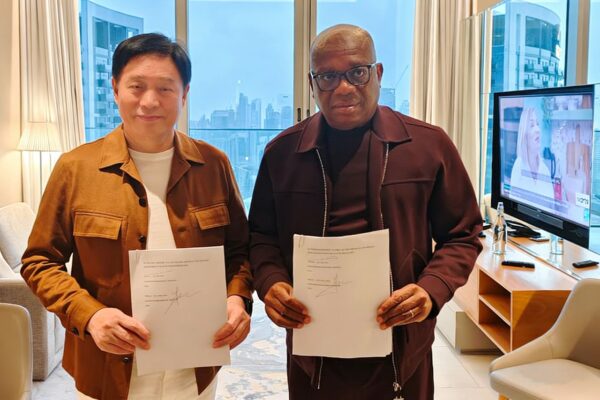
China’s GCL Group and Swiber Africa Nigeria have signed a framework cooperation agreement to develop Nigeria’s new-generation energy system and lithium battery value chain, marking a significant step in China–Nigeria industrial collaboration.
The agreement was signed in Dubai by Chairman of GCL Group, Zhu Gongshan, and Chairman of Swiber Africa, Dr Orji Uzor Kalu.
It provides for joint development of energy infrastructure, strategic lithium resources and integrated industrial supply chains.
GCL said the partnership aligns with China’s Belt and Road Initiative and forms part of its broader international expansion strategy.

The company will deploy its experience in oil, gas and green energy projects across Africa to support Nigeria’s energy transition and industrial growth.
Nigeria, Africa’s largest economy, continues to face chronic electricity shortages and a fragile grid, limiting industrial output and economic development.
Under the agreement, GCL will support the construction of a new-generation power system using high-efficiency clean energy technologies and intelligent grid management solutions.
Key projects under consideration include 3 gigawatts of gas-fired power plants, 4 gigawatts of integrated wind and solar facilities, as well as hydropower and coal-fired stations.
Grid modernisation initiatives will run in parallel to create an efficient generation–transmission–distribution network, aligned with Nigeria’s Presidential Power Initiative.
GCL will also introduce its virtual power plant management system, already deployed in China’s Suzhou Industrial Park, offering rapid-response energy management and accurate load forecasting to improve grid stability.
A second pillar of the partnership focuses on lithium resource development. Nigeria holds significant lithium deposits but has historically exported raw ore with limited local processing.
From 2026, Nigeria plans to strengthen domestic lithium refining, and GCL will provide mining and smelting technologies to support this policy direction.
The partners plan to develop a lithium carbonate smelting facility in Abia State, creating a closed-loop industry chain covering extraction, processing and export.
GCL said this mirrors its integrated natural gas development model in Ethiopia and will secure stable overseas lithium supplies for its battery materials operations in China.
The deal positions Nigeria to expand local value addition in critical minerals while advancing national energy security and industrialisation.