
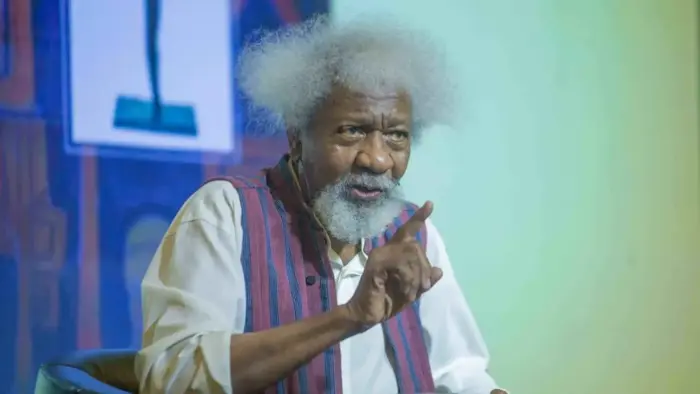
Nobel laureate Prof. Wole Soyinka has cautioned that societies that ignore their history and fail to confront injustice risk descending into tyranny.
He stressed that cultural identity and historical awareness are essential for justice and national renewal.
Delivering the Centenary Lecture of the Yoruba Tennis Club (YTC) in Lagos, Soyinka traced the club’s origins to a wider struggle for social liberation, dignity, and self-definition among Nigerians.
He noted that the organisation, which later evolved into the Yoruba Tennis Club, was intended not merely as a social platform but as part of a historical movement to reclaim dignity in the face of oppression.
Describing the club’s name as “a powerful affirmation of identity,” Soyinka rejected the notion that embracing Yoruba heritage conflicts with global or universal values. “What is wrong with being Yoruba?” he asked, insisting that cultural rootedness does not negate cosmopolitanism.
“Humanity is not built on cultural erasure, but on the recognition, respect and dignity of origins,” Soyinka added.
READ ALSO: Wole Soyinka Opens Up on US Visa Revocation
Reflecting on the club’s founders, he said, “The founders of the club understood who they were and what they stood for.”
Read Also
Turning to Nigeria’s post-independence experience, Soyinka observed that many leaders were more eager to replace colonial rulers than to dismantle the structures of injustice they inherited. He noted that the excitement of independence often overshadowed the need for deep reflection on governance, accountability, and justice.
Soyinka also discussed his early play, A Dance of the Forests, describing it as “deliberately pessimistic” because it aimed to caution against repeating historical errors. Contrary to expectations that the play should celebrate independence, he said he believed the real task of nation-building had only just begun.
“The future is not merely about liberating ourselves from the past,” he said. “Genuine progress requires remembering, confronting and learning from past mistakes, to avoid reproducing them in new forms.”
He added that tyranny does not always arrive abruptly but often emerges when societies neglect justice, silence dissent, and allow leaders to step comfortably into the shoes of former oppressors.
Chief Olawumi Gasper, Chairman of Yoruba Tennis Club, reaffirmed the institution’s commitment to preserving history, culture, and intellectual leadership. He described the centenary milestone as “a testament to the institution’s enduring legacy and sustained role in shaping Nigeria’s cultural and intellectual landscape,” noting that the club has remained rooted in tradition while engaging contemporary issues.
Speaking about Soyinka, Gasper said the Nobel laureate is “a man of deep intellectual capacity, cultural depth and moral clarity,” and highlighted that the interactive session offered a rare opportunity to discuss literature, culture, nationhood, humanity, conscience, and the enduring role of history in shaping societies.
Gasper also paid tribute to the founding fathers of Yoruba Tennis Club, acknowledging “their foresight, sacrifices and commitment to sustaining the institution’s values and traditions.”