
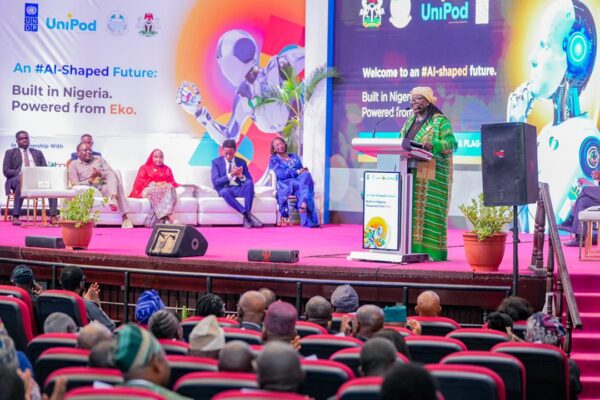
The Vice President, Senator Kashim Shettima, has affirmed Nigeria’s preparedness to lead Africa in deploying Artificial Intelligence (AI) to unlocking new pathways for the continent’s prosperity.
He said while AI has become humanity’s most powerful general-purpose technology that would define lives and the future of mankind, the technology will continue to serve as a “profound engine of creativity, capable of augmenting human intelligence and expanding the horizons” of human possibilities.
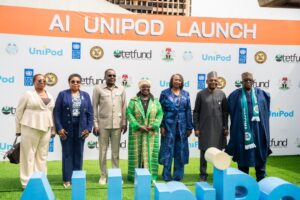
Senator Shettima, who spoke on Monday in Lagos during the official launch of the AI University Innovation Pod (UniPod) University of Lagos, explained why “Nigeria must not be passive in the unfolding AI era.”
Represented by Deputy Chief of Staff to the President, Senator Ibrahim Hassan Hadejia, the Vice President said the nation must build digital foundations that allow its innovators, governments, and enterprises to create solutions that reflect its realities and address the country’s unique challenges.
“Whether in agriculture, health, education, or finance, AI has the power to unlock new pathways for prosperity. But it will do so only if we design systems that are inclusive, equitable, and rooted in our values. I believe Nigeria is prepared to lead the whole African continent in this endeavour.
“Our investments in digital public infrastructure, our embrace of innovation ecosystems, and our commitment to responsible AI governance all point to a singular goal: to make Nigeria not a consumer of imported technologies, but a producer of knowledge, innovation, and scalable solutions,” he stated.
Inaugurating the UniPods, VP Shettima said the national innovation systems reflects a deliberate shift in how universities are being viewed, noting that the citadels of great learning are not only centres of instruction but also “platforms for production, enterprise, and national development.
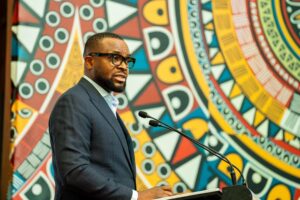
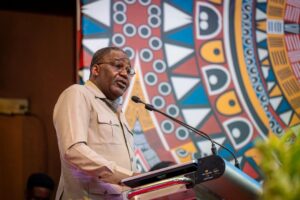
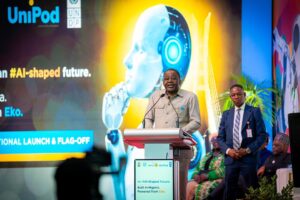
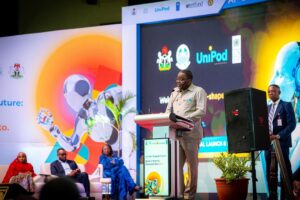

“Projects like this UniPod are an integral part of that delivery architecture where students, researchers, and industry practitioners collaborate to build solutions that respond directly to real economic needs,” he added.
The VP thanked development partners, including the United Nations Development Programme (UNDP), Tertiary Education Trust Fund (TETFUND), the University of Lagos, and the Lagos State Government for the nation’s first UniPod.
“More importantly, I want to emphasise that this is not a one-off intervention. It is part of a system we intend to scale, sustain, and subject to results. What we are doing here, and across similar efforts nationwide, is to build dozens of institutional bases required to compete—patiently, but with clarity, he further stated.
Earlier, the Resident Representative of the UNDP in Nigeria, Ms. Elsie G. Attafuah, noted that the UniPod is a system that “ensures that Nigeria’s young population is not only prepared for the future but is actively engaged in shaping it.”
She said, as a system that connects knowledge to opportunity, innovation to enterprise, and talent to national prosperity, the UniPods will position Nigeria, “not merely as a participant in the global economy, but as a country that is deliberately building the foundations for long-term competitiveness and inclusive growth.
“This is a significant moment. And UNDP is proud to stand with UNILAG, the Government, and people of Nigeria as a partner in this journey,” she added