The Jigawa State Government has launched a major Ramadan welfare programme, reaching over 3,100 civil servants, students, and vulnerable residents across the state.
Officials say the initiative aims to ease the fasting period while supporting local economies and ensuring no family goes without during the holy month.
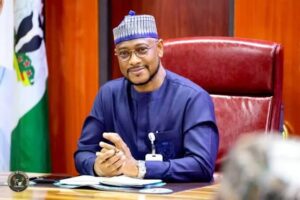
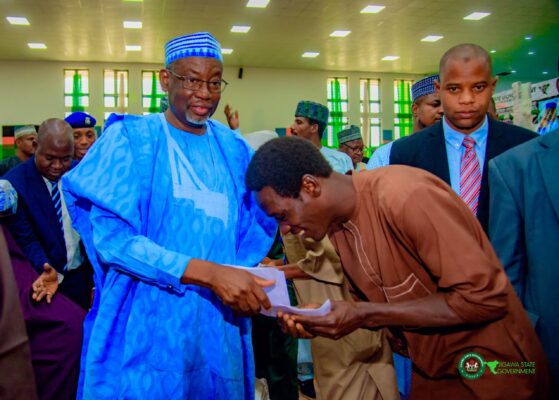
Governor Umar Namadi officially launched the distribution at the Government House, targeting 620 staff members, each receiving 10 kilograms of rice, maize, millet, a carton of spaghetti, and 20,000 naira in cash.
Speaking on the programme, the Commissioner for Special Duties and Humanitarian Affairs, Alhaji Auwalu Sankara, said that 562 Tsangaya schools across the state’s 27 local government areas are also benefiting from food support.
READ ALSO: FG Trains 200 Jigawa Youths in Solar Technology, Others to Boost Jobs, Curb Import Reliance
He added that the government plans to distribute over eight million meals through 640 centres, up from 634 centres in last year’s Ramadan season.
Read Also
- Jigawa Expands Affordable Housing, Invests N2Bn, Trains 135 Youths in Construction Skills
- Jigawa Spends N8.1Bn on Scholarships, Expands Student Support Programme
- Jigawa Assembly Speaker Elected Chairman of APC Progressive Speakers Conference
- One Dies of Lassa Fever in Jigawa, Contacts Under Surveillance
The programme currently operates in 287 political wards, serving an average of 420 beneficiaries per centre daily.
Each meal includes Jollof rice, Kunu, and Kose, helping families maintain their fasting routines with ease.
Officials say the initiative is designed not only to support families but also to boost the local economy, engaging nearly 6,000 vendors, cooks, and supervisors, who will each earn an estimated 2,220 naira for their services.
In a vote of thanks, the Head of Civil Service, Muhammad Dagaceri, represented by Permanent Secretary Muhammad Yahaya Jabo, commended the government for prioritising workers’ welfare.
He highlighted ongoing initiatives, including staff loans and welfare support, as part of efforts to strengthen the civil service, described as the “engine room” of the administration.
Governor Namadi urged residents and civil servants to embrace the spirit of generosity, unity, and compassion during the holy month. He described the programme as a reflection of the state government’s commitment to social welfare and the well-being of its workforce, while encouraging collective efforts to strengthen families and communities across Jigawa State.