
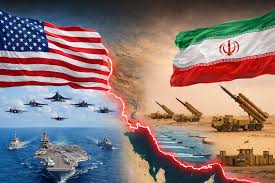
Iran has agreed to a two-week ceasefire with the United States, paving the way for direct negotiations scheduled to begin in Islamabad, Pakistan, on Friday.
The announcement by Iran’s Supreme National Security Council on Wednesday followed a statement by Donald Trump that Washington would suspend planned military action against Tehran for the same period.
Trump said the truce was conditional on Iran ensuring the “complete, immediate and safe” reopening of the Strait of Hormuz — a critical maritime route linking the Gulf to the Arabian Sea and responsible for roughly a fifth of global oil shipments.
The strategic waterway had been partially blocked by Iran following joint US and Israeli strikes on February 28, a move that disrupted global trade, pushed up oil prices and triggered fuel shortages in several regions.
Iran’s Foreign Minister, Abbas Araghchi, confirmed Tehran’s acceptance of the ceasefire, stating that Iranian forces would halt defensive operations if attacks against the country cease.
He added that safe navigation through the Strait of Hormuz would resume in coordination with Iran’s armed forces, noting that the decision was based on Washington’s acceptance of a 10-point proposal put forward by Tehran.
Trump, in a post on Truth Social, said the US had already achieved its military objectives and was close to reaching a “definitive agreement concerning long-term peace” with Iran. He described Tehran’s proposal as a workable framework, adding that most contentious issues had been largely resolved.
Meanwhile, Pakistan’s Prime Minister, Shehbaz Sharif, said both sides had agreed to an immediate and comprehensive ceasefire, extending beyond Iran to include allied theatres such as Lebanon.
Sharif confirmed that delegations from both countries have been invited to Islamabad on April 10 for negotiations aimed at reaching a final settlement.
According to Iranian authorities, the 10-point proposal includes demands for Iranian oversight of the Strait of Hormuz, the withdrawal of US forces from Middle Eastern bases, and an end to military operations against allied groups in the region.
The proposal also calls for the lifting of all sanctions imposed by the US, the United Nations Security Council and the International Atomic Energy Agency, alongside compensation for war-related damages and the release of frozen Iranian assets.
Tehran further insists that any final agreement be ratified through a binding United Nations Security Council resolution.
Despite agreeing to negotiations, Iran’s National Security Council expressed “complete distrust” of the United States, warning that it would respond decisively to any violation of the ceasefire.
Israel has also supported the ceasefire but said it does not include Lebanon though Pakistan said it does.
This is a sticking point that will need to be cleared in the coming days.