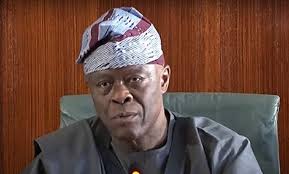
The Minister of Finance and Coordinating Minister of the Economy, Wale Edun, has warned that illicit financial flows are draining about $88 billion from Africa each year, undermining development efforts across the continent.
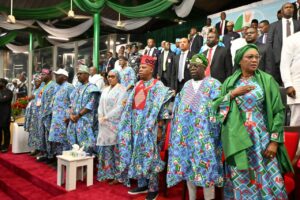
Edun made the disclosure while delivering a keynote address at the 5th Session of the Sub-Committee on Tax and Illicit Financial Flows under the Specialised Technical Committee on Finance, Monetary Affairs, Economic Planning and Integration in Abuja.
He described illegal financial outflows as one of the biggest threats to Africa’s economic progress, noting that such funds could otherwise be channelled into critical sectors including infrastructure, education and healthcare.
“Illicit financial flows alone are estimated to cost the continent nearly $88 billion annually—resources that should otherwise be invested in critical areas of our economies,” he said.
The minister identified tax evasion, weak institutions, limited economic diversification and reliance on external financing as persistent challenges facing African economies.
He called for urgent fiscal reforms, urging governments to improve tax collection systems, widen the tax base and block revenue leakages.
According to him, strengthening public financial management, promoting financial inclusion and enhancing compliance are essential to achieving sustainable growth.
Edun also advocated the development of strong capital markets and closer cross-border cooperation to tackle illicit financial flows more effectively.
He said reforms must be backed by stronger institutions, improved digital systems and active citizen participation to ensure long-term success.
The minister pointed to African Union’s Agenda 2063 as a roadmap for improving tax systems, governance and domestic revenue mobilisation across the continent.
On Nigeria’s efforts, Edun said reforms introduced since May 2023 under Bola Ahmed Tinubu are aimed at simplifying the tax system, expanding the tax base and reducing the burden on vulnerable citizens.
He added that measures such as the removal of fuel subsidies, exchange rate unification and improved transparency in oil and gas revenue management have helped reduce distortions and boost investor confidence.
Edun noted that the introduction of a National Single Window system would enhance trade efficiency and reduce leakages linked to illicit financial flows.
Earlier, the Executive Chairman of the Nigeria Revenue Service, Zacch Adedeji, described illicit financial flows as a major drain on development, warning that billions of dollars are lost annually through illegal transfers, trade mispricing and tax evasion.
He stressed that such losses translate into fewer investments in schools, hospitals and infrastructure, calling for stronger collaboration among African countries to address the challenge.
Also speaking, Executive Secretary of the African Tax Administration Forum, Mary Baine, said domestic revenue mobilisation remains critical to financing Africa’s development goals.
She noted that while Africa’s growth is projected to rise from 3.3 per cent in 2024 to about 3.9 per cent in 2025, with a possible increase beyond 4 per cent in 2026, the pace remains below the continent’s full potential.
Baine added that although tax revenues are improving across many countries, the average tax-to-GDP ratio of about 16 per cent remains low, underscoring the need for stronger policy action.