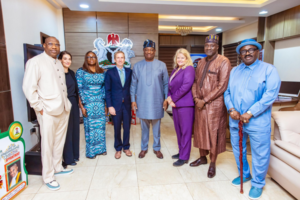

First Lady Oluremi Tinubu on Saturday paid a courtesy visit to the Sultan of Sokoto, Alhaji Muhammadu Sa’ad Abubakar III, where she expressed appreciation for the monarch’s continued support and guidance to the administration of President Bola Tinubu.
Mrs Tinubu, who visited the Sultan at his palace in Sokoto, said the traditional ruler had remained a dependable source of counsel since the inception of the administration.
According to a statement by her Senior Special Assistant on Media, Busola Kukoyi, on Saturday, July 25, the First Lady recalled the longstanding relationship between their families, saying the visit was to personally thank the Sultan for his fatherly support.
She noted that the monarch had consistently offered advice that helped keep the administration on the right path.
READ ALSO: Tinubu Lauds Umahi on 62nd Birthday
“The Sultan is always pointing the administration in the right direction,” she said.
ADVERTISEMENT
Responding, the Sultan called for sustained prayers for Nigeria, urging leaders to continue seeking divine intervention, particularly over the country’s security challenges.
He said those responsible for violence and other criminal acts should embrace genuine repentance.
Read Also
“As leaders, there is a need to keep seeking divine intervention especially for those group of people who have been perpetrating evil in the land,” the Sultan said.
He added: “My prayer is that those people would come to true repentance and live appropriately.”
The monarch also commended the First Lady for the interventions of the Renewed Hope Initiative (RHI), describing the programme as one that had positively impacted millions of Nigerians.
ADVERTISEMENT
According to him, the initiative’s various empowerment and welfare programmes had improved the lives of citizens across the country.
Sokoto State Governor Ahmad Aliyu also lauded Mrs Tinubu for visiting the revered traditional ruler, saying the Renewed Hope Initiative had continued to make meaningful contributions to the lives of Nigerians.
He described the programme’s interventions as “people centered,” noting that they were designed to improve the lives of women, youths, children and families.