The Federal Ministry of Works has concluded its National Media Tour of the North-East with an inspection of ongoing infrastructure projects on the Mambila Plateau in Sardauna Local Government Area of Taraba State.
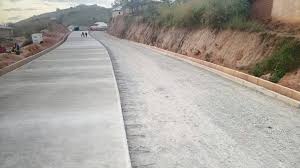
The projects reviewed include the reconstruction and rehabilitation of the Bali–Serti (Gashaka)–Gembu Road and the construction of the Gembu–Mbamnga–Yang (Lip) Road, a strategic corridor linking border communities to the rest of the country.
The Gembu–Mbamnga–Yang Road, which connects directly to Cameroon, is being delivered under the administration of Bola Ahmed Tinubu.
Communities in the area had long demanded road access following their decision to join Nigeria in 1961, a request that remained unmet for decades.
The Mbondua of Mbamnga Chiefdom, Alhaji Sale Mbondu, praised President Tinubu and the Minister of Works, David Umahi, for bringing visible federal presence to the area.
He cited improvements in trade, tourism, mobility, healthcare access and travel time, noting that journeys that once lasted up to six hours across rivers and poor terrain have now been significantly reduced following bridge construction and road works.
The Federal Controller of Works in the state, Engr. Ibrahim Usman, said the project began on 13 January 2025 and is scheduled for completion on 12 July 2027, with overall progress at 20.76 per cent as of January 2026.
One bridge has been completed, while another is under construction.
A contractor’s representative, Mathew Legacy, attributed minor delays to difficult terrain and heavy rainfall but assured that quality standards would be maintained.
Sardauna LGA Vice Chairman, Paul Ngantem, described the project as critical to economic and social life across the plateau.
Another major project inspected was the 235-kilometre Bali–Serti (Gashaka)–Gembu Road, executed by S.C.C. Nigeria Limited and funded under the NNPCL Tax Credit Scheme.
While new tax-credit road funding has been halted, the President approved continuation of ongoing works as alternative financing options are explored.
Sections of the route have been asphalted, with drainage, retaining walls, crash barriers and slope protection ongoing to address landslides and falling rocks.
Officials confirmed that 12 kilometres of wearing course and 18 kilometres of binder course have been laid, alongside more than four kilometres of asphalt shoulders.
The tour also featured the commissioning of emergency repairs on failed sections of the Jalingo–Mutum Biyu–Tella–Wukari Road, a vital corridor linking North-East states to the North-Central region and the Federal Capital Territory.
The intervention aims to reduce travel time, lower vehicle maintenance costs and improve road safety.
According to the ministry, the inspected projects will improve service delivery to road users by reducing transport costs, saving travel time and energy, and minimising highway accidents and fatalities across the region.