
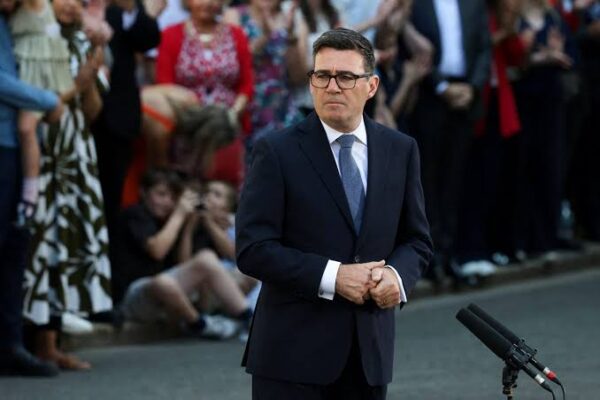
UK Prime Minister Andy Burnham has defended his government’s decision to scrap Value Added Tax (VAT) on household electricity bills, describing it as an immediate step to ease the cost-of-living crisis, as Opposition leader Kemi Badenoch questioned how a raft of new spending commitments would be financed.
The removal of VAT on electricity bills is expected to save the average household about £45 a year, or roughly £4 a month.
“I said I would give people a bit more breathing space. Today I’m taking immediate action – cutting taxes on energy bills to put more money in your pocket,” Burnham said.
While the measure will lower electricity charges, analysts say it may not significantly reduce overall energy bills because wholesale energy prices remain volatile. Household electricity bills rose by 13 per cent in July following higher wholesale gas prices linked to conflict in the Middle East, with prices expected to remain elevated in the coming months.
The announcement comes amid continuing cost-of-living pressures, with food prices rising at an annual rate of 2.2 per cent and wage growth failing to keep pace with the cumulative increase in household costs.
ADVERTISEMENT
Burnham also unveiled a 23-member Cabinet in which women outnumber men for the first time, with 12 women and 11 men serving as ministers.
However, Conservative leader Kemi Badenoch criticised the government’s broader economic agenda, arguing that it had announced billions of pounds in spending commitments without explaining how they would be funded.
Badenoch cited proposals including lower energy bills, a higher personal tax allowance, the nationalisation of Thames Water, a major council house building programme, increased funding for mayors, a new National Care Service, higher overseas aid, lower student loan repayments, expanded employment support and plans to end homelessness.
“Where’s the money coming from?” Badenoch asked, expressing concern that the Prime Minister was making extensive promises without a credible funding plan.
She argued that further borrowing was unsustainable because Britain already spends more on servicing its debt than on defence, while warning against higher taxes, saying families and businesses were already facing a heavy tax burden.
ADVERTISEMENT
Badenoch urged Burnham to explain how the policies would be financed, insisting that reducing public spending remained the only viable option.