The lawmaker representing Edo North in the National Assembly, Adams Oshiomhole, has defended President Bola Tinubu’s economic reforms, saying the administration’s legacy infrastructure projects under the Renewed Hope Agenda will have a transformative impact on Nigeria’s economy and deliver long-term benefits despite current economic challenges.
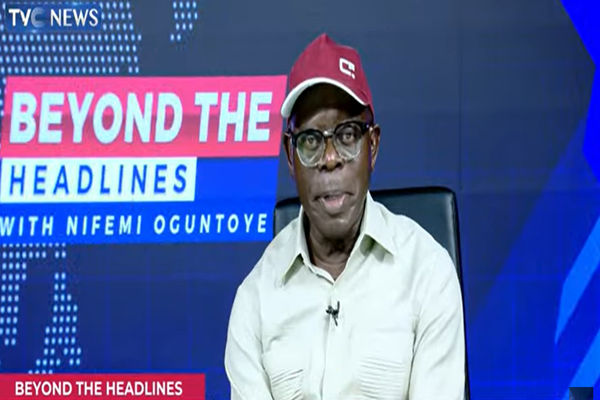
Oshiomhole stated this during an interview on TVC News’ Beyond the Headline with Nifemi Oguntoye on Monday, July 27, while responding to questions on the impact of the Tinubu administration’s reforms ahead of the 2027 general election.
Highlighting the significance of the administration’s flagship infrastructure projects, the former Edo State governor said they would stimulate economic growth, improve connectivity and reduce the cost of doing business across the country.
READ ALSO: Tinubu Servicing Debts Incurred Under Jonathan, Buhari — Oshiomhole
“These huge projects, what is generally now referred to as the legacy projects of the Renewed Hope Agenda, connecting Lagos to Calabar, connecting Sokoto to Badagry… will eventually drive the economy of this country.”
Drawing parallels with China’s economic transformation, Oshiomhole said sustained investment in transport infrastructure was key to national development.
ADVERTISEMENT
“People talk about China. One of the things I observed in China is that they invested hugely in road infrastructure to be able to move goods and services at less cost. It also makes a statement about the unity of the country when people can move around effortlessly.”
The senator acknowledged that Nigerians were still grappling with the effects of ongoing reforms but argued that the economy had begun to show signs of recovery.
“We are not yet there but obviously there’s a huge, huge relief… certainly the room is not as hot as it was three years ago.”
Read Also
Oshiomhole attributed the improvements to difficult policy decisions taken by the Tinubu administration after inheriting what he described as severe fiscal distortions.
“The past government before President Tinubu resorted to, let me put it in layman’s language, printing bank notes not supported and spending the money in a manner that led to huge pressure on the exchange rate.”
ADVERTISEMENT
He said those reforms had contributed to greater exchange rate stability and a gradual decline in inflation.
“The impact of that was the huge shock you saw when the naira was floated… Now it has stabilised. I think even the worst critic will agree that for the very first time we are seeing the naira achieving stability.”
According to him, sustained moderation in inflation would eventually improve the cost of living for ordinary Nigerians.
“If you can sustain that steady decline in the rate of inflation, people will experience relief in the cost of living which will translate into improvement in the quality of life.”
The senator also pointed to improved allocations to state governments, saying enhanced transparency in the management of federation revenues had enabled many states to pay salaries promptly and increase investment in infrastructure. He further cited the Student Loan Scheme as one of the administration’s social interventions easing financial pressure on Nigerian families.
ADVERTISEMENT