The Presidency has announced significant progress towards the establishment of state police, with a constitutional amendment expected soon following months of consultations among key stakeholders.
Chief of Staff to the President, Femi Gbajabiamila, disclosed this on Thursday while briefing State House correspondents after a high-level consultative meeting held at the Presidential Villa in Abuja.
He said discussions on the proposed framework commenced three to four months ago on the directive of President Bola Ahmed Tinubu, noting that the process has now gathered momentum.
ADVERTISEMENT
Gbajabiamila emphasised that establishing state police involves complex constitutional and legal considerations, warning that the process cannot be rushed.
“We started deliberations in the last three or four months on how to go about the establishment of state police as directed by Mr President.
ADVERTISEMENT
Establishing state police is not something that you do with the snap of the fingers.
There is a lot involved in terms of constitution and legalities, and thank God we have now gained a lot of traction,” he said.
He added that the current focus is on securing the necessary constitutional amendment, after which enabling legislation would be introduced to operationalise the framework.
ADVERTISEMENT
According to him, national discourse has moved beyond the question of whether state police is necessary, to how best to structure and implement it effectively.
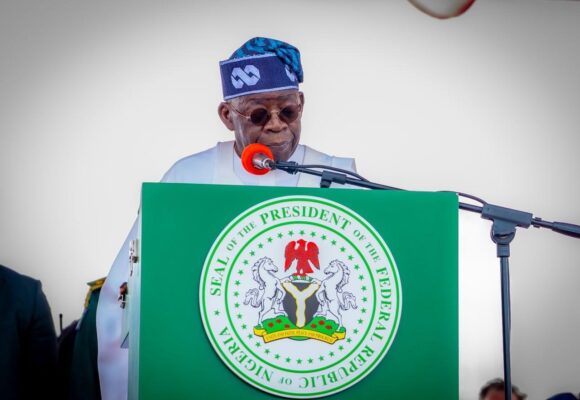
Gbajabiamila also revealed that President Tinubu would be presented with a comprehensive report on the outcome of the meeting, as part of ongoing efforts to strengthen the country’s security architecture.
The meeting forms part of a broader series of consultations initiated by the Federal Government to develop a workable model for state policing.
ADVERTISEMENT
The initiative is aimed at improving internal security, enhancing intelligence gathering at the grassroots level, and boosting the capacity of sub-national governments to respond to emerging threats.
President Tinubu has consistently advocated for decentralised policing, arguing that it would improve the protection of lives and property across Nigeria.
Other top officials present at the meeting included Deputy President of the Senate, Jibrin Barau; Deputy Speaker of the House of Representatives, Benjamin Kalu; Attorney-General of the Federation and Minister of Justice, Lateef Fagbemi; and the Inspector-General of Police, Tunji Disu, among other senior government officials.