
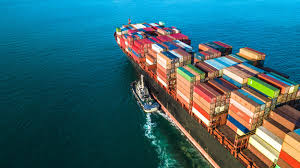
A maritime policy think tank, the Sea Empowerment and Research Center (SEREC), has accused some shipping lines operating in Nigeria of entrenched sharp practices, warning that weak regulation and alleged regulatory capture are costing the economy hundreds of billions of naira each year.
In a Public White Paper released for national discourse and policy action, SEREC said Nigeria’s port and shipping environment had become a macroeconomic concern rather than merely a sectoral issue.
The document was addressed to the Nigerian public, the National Assembly, the Ministry of Marine and Blue Economy, the Nigerian Shippers’ Council and other key industry stakeholders.
The think tank noted that Nigeria’s ports handle between 1.5 and 1.8 million twenty-foot equivalent units (TEUs) annually, with the Apapa port accounting for more than 60 per cent of container traffic.
It estimated that incremental and often unexplained charges of between ₦150,000 and ₦250,000 per container impose an annual burden of ₦225 billion to ₦450 billion on the economy.
SEREC further claimed that logistics-related charges account for as much as 40 per cent of landed import costs, contributing up to 1.2 percentage points to headline inflation.
When delays, demurrage, storage fees and productivity losses are factored in, total economic losses could reach ₦700 billion yearly.
“This is no longer a sectoral issue; it is a macroeconomic one,” the report stated.
The White Paper highlighted several alleged practices undermining trade facilitation and investor confidence, including prolonged withholding of container deposit refunds, remote cargo release authorisations issued from overseas offices despite local presence, speculative demurrage billing imposed upfront, and unauthorised diversion of containers to alternative ports without shipper consent.
According to SEREC, such practices distort importers’ cash flow, raise financing costs and create opportunities for abuse within the cargo clearance process.
It contrasted Nigeria’s experience with global benchmarks in the European Union, the United Kingdom, the United States and Singapore, where refund timelines, demurrage rules and cargo release procedures are strictly regulated.
The organisation also raised governance concerns, alleging patterns consistent with regulatory capture.
It said stakeholders had claimed that some shipping lines engage politically exposed persons and former public officials as advisers or board members to lobby for weaker enforcement.
While noting that it was not alleging criminal wrongdoing, SEREC warned that regulatory inertia, selective enforcement and delayed accountability had created a perception that certain operators were effectively beyond regulation.
The report further questioned legislative oversight, citing a National Assembly public hearing reportedly held in 2025 following petitions against major shipping operators, including MSC.
It said no committee white paper or formal findings had been made public since the hearing, a situation it argued weakens legislative credibility.
SEREC also cautioned that current practices could undermine Nigeria’s planned National Single Window system, designed to promote transparency and reduce human discretion in trade processes.
Without reform, it warned, the system risked becoming “a digital overlay on analogue abuse” rather than a genuine facilitation tool.
The think tank called for urgent policy and regulatory action, including statutory timelines for refunds with interest penalties, a ban on speculative demurrage billing, mandatory local cargo release authority and the publication of all legislative committee findings on shipping line investigations.
The White Paper was signed by Eugene Nweke, Head of Research at SEREC, who said it was issued to inform the public, challenge institutions and prompt corrective action.