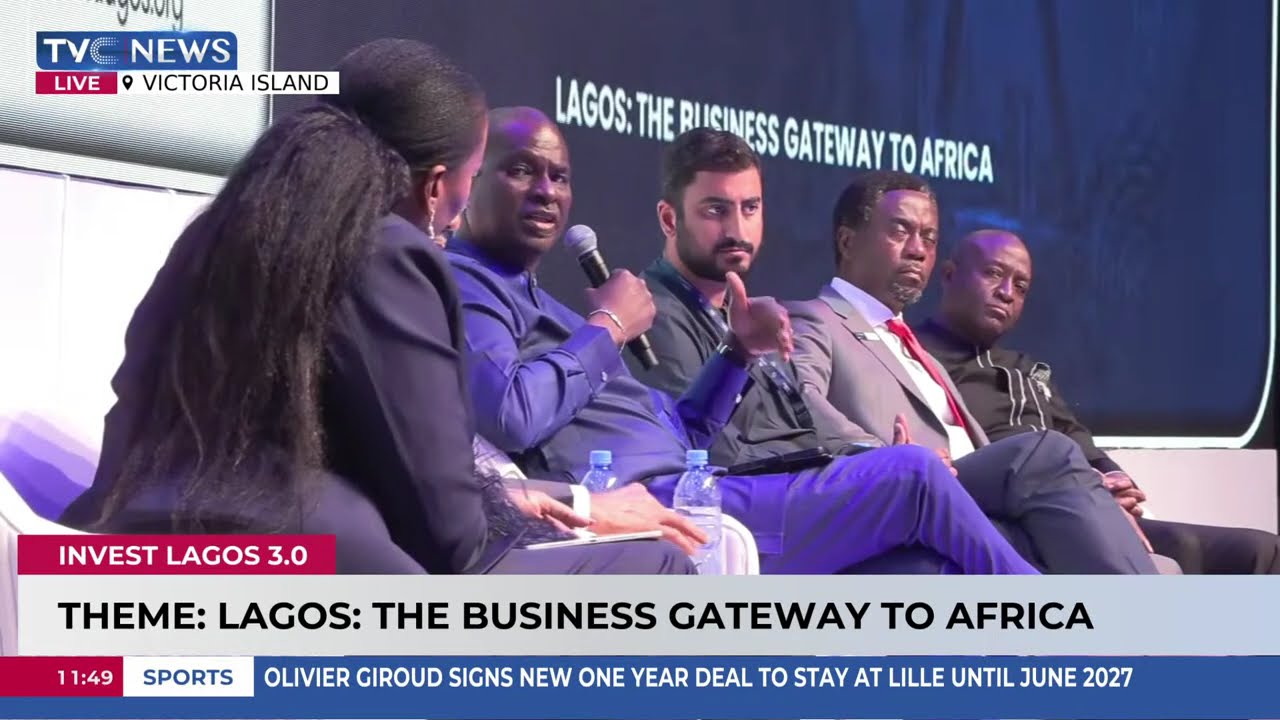
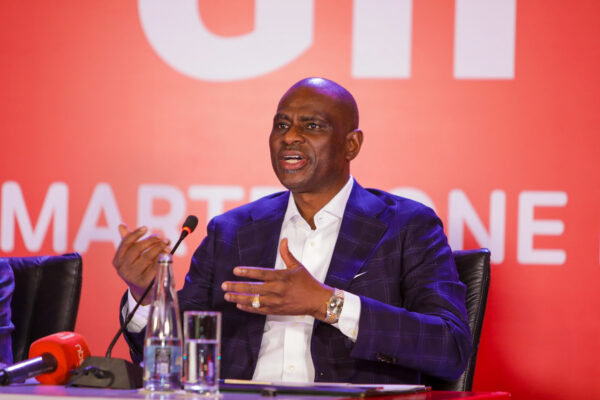
The Chairman of the Nigeria Sovereign Investment Authority (NSIA), Segun Ogunsanya, has called for a stronger mobilisation of domestic capital to finance Nigeria’s infrastructure development, while highlighting the agency’s ongoing efforts to anchor a $1 billion infrastructure fund in partnership with international development institutions.
Ogunsanya made the remarks during his address at the Invest Lagos 3.0 Summit themed “Lagos: The Business Gateway to Africa,” where he stressed the importance of deepening local financial participation in long-term infrastructure projects.
He said Nigeria must move beyond heavy reliance on development finance institutions (DFIs) and external funding, arguing that significant untapped capital exists within the country’s financial ecosystem.
“I would like to see a deeper level of local capital formation. I’ve seen a lot of emphasis on DFIs and the money coming in from outside the country. But if you look deeply, we need to find ways of harnessing local capital, capital from pension funds, capital from insurance companies, capital from banks,” he said.
ADVERTISEMENT
READ ALSO: Lagos Development Agenda Designed to Outlive Governments – Deputy Gov, Obafemi Hamzat
According to him, domestic pension funds, insurance assets and banking liquidity represent a sustainable source of long-term financing that can be structured to support infrastructure through Public-Private Partnership (PPP) frameworks.
Ogunsanya disclosed that NSIA is currently anchoring a $1 billion infrastructure fund in collaboration with the International Finance Corporation (IFC), designed to strengthen infrastructure investment and de-risk large-scale projects.
“Couple of days ago, we just got some confirmation from IFC. They’re going to be part of a $1 billion fund that we’re anchoring. This $1 billion fund is to provide some sort of guarantee for infrastructure investment,” he said.
He explained that the fund would cover key stages of infrastructure delivery, including project preparation, project development, risk guarantees and risk capital support.
Read Also
“The World Bank IFC just came in again and this funding is meant to cover four different areas of any infrastructure investment — the project preparation phase, the development phase, those who want guarantees, and also to provide the risk capital itself,” he said.
ADVERTISEMENT
Ogunsanya noted that the initiative is aimed at improving project bankability while ensuring strict financial discipline and due diligence in investment selection.
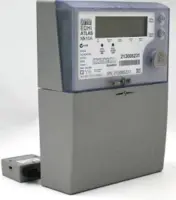
He also commended the Lagos State Government for its sustained partnership with NSIA, noting that the collaboration has supported key infrastructure projects, including power sector investments such as the Victoria Island power station.
“We just did another power station a couple of days ago. The VI power station is also being supported by the NSIA,” he said.
While reaffirming the importance of infrastructure expansion, Ogunsanya warned that future urban development must prioritise inclusiveness and affordability to avoid deepening inequality in rapidly growing cities.
“As we look at the city of the future, there is one thing that we need to look out for. We should make this a very affordable city and also a very inclusive city. We shouldn’t build a city of prosperous islands surrounded by poverty-stricken communities,” he said.
ADVERTISEMENT
He added that sustainable growth must ensure broad-based benefits for residents, not just concentrated prosperity in select areas.