Nigeria’s equities market recorded its strongest trading year on record in 2025, as a sharp rise in foreign participation pushed activity on the Nigerian Exchange (NGX) to unprecedented levels.
Market figures showed that the value of trades executed on the NGX jumped to N11.23 trillion in 2025, more than double the N5.587 trillion recorded in 2024.
This represented a 101 per cent surge and marked the highest annual turnover ever achieved by the bourse.
The performance also far outpaced earlier years, with transactions standing at N3.578 trillion in 2023, N2.324 trillion in 2022, N1.899 trillion in 2021 and N2.168 trillion in 2020.
Analysts linked the dramatic rise in turnover to renewed interest from foreign portfolio investors, whose activity climbed to its highest level in four years.
For the first time in a long while, Nigeria also recorded a net positive foreign flow, as inflows exceeded outflows, signalling that overseas investors were increasingly willing to keep their capital in the country.
The stronger foreign engagement came alongside an exceptional run for Nigerian equities. By the end of 2025, the NGX All Share Index (ASI), the benchmark for the market, had delivered a full-year return of 51.19 per cent, translating into about N32.13 trillion in net capital gains and placing Nigeria among the world’s five best-performing stock markets.
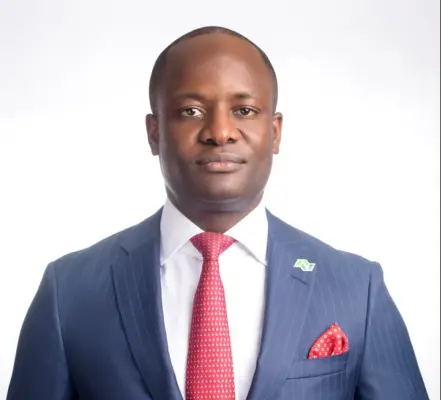
Reacting to the results, Group Managing Director of Nigerian Exchange Group (NGX Group) Plc, Temi Popoola, said the rally reflected growing confidence in Nigeria’s economic direction.
He said: “The Nigerian capital market in 2025 demonstrated resilience despite domestic and global economic headwinds.
“This performance underscores the importance of policy consistency, purposeful reforms, and strategic collaboration in strengthening investor confidence and sustaining market growth.
READ ALSO: Tinubu Hails NGX Surpassing N100 Trillion Benchmark
“During the year, efforts to advance economic reforms and improve market structures helped support a stable environment for capital formation, while our continued investment in technology played a critical role in expanding access, enhancing transparency, and improving operational efficiency across the market.”
Popoola praised President Bola Ahmed Tinubu for what he described as policy clarity and reform momentum that have helped restore investor trust.
Read Also
He added that improved macroeconomic coordination and a clear reform path had created a more attractive climate for sustainable investment, while the NGX Group would continue working with regulators and market operators to bring in quality listings, boost liquidity and expand retail participation.
Chairman of the Association of Securities Dealing Houses of Nigeria (ASHON), Mr. Sehinde Adenagbe, also linked the market’s strong showing to government reforms.
He said: “There is no gain saying that since President Tinubu took office in May 2023, Nigeria’s stock market has experienced strong growth and renewed investor interest.
“The NGX All-Share Index more than doubled, rising by around 136 per cent between 2023 and 2025, with market capitalisation expanding sharply and local and foreign participation strengthening”.
Adenagbe noted that deeper digitisation of the economy and capital market had made it easier for young Nigerians to invest, particularly through fintech channels supported by the NGX Group, which he said had significantly broadened market access.
According to him, the market’s rally reflected better macroeconomic conditions, improved liquidity and rising investor appetite. He added: “We believe that these strong performances signal enhanced market confidence, partly driven by broader economic measures under the administration.”
He identified key policy moves including the Investment and Securities Act (ISA) 2025, Nigeria’s exit from the Financial Action Task Force (FATF)’s “grey list”, and reforms in the foreign exchange market, as major drivers of renewed foreign inflows. Greater transparency and stability in the forex market, he said, had reduced pricing distortions and improved predictability for global investors and businesses.
“Stable forex conditions have been widely cited as a contributor to increased foreign capital flows into equities and other financial instruments,” Adenagbe said.
However, he urged authorities to do more to sustain the momentum by encouraging new listings, including reviving underperforming state-owned enterprises, and by providing incentives for long-term institutional investors.
Adenagbe said: “We also need more structural reforms, coordinated implementation, market infrastructure improvements and inclusive growth measures to sustain momentum and position Nigeria as a competitive driver of national economic growth and development.
“The issue surrounding the Capital Gains Tax (CGT) should be revisited to give the market clarity. More intentional approaches are needed to stamp out insecurity and acts of terrorism from the country as investors want to put their resources in secured environment.”
Adding his perspective, Managing Director of GTI Capital, Mr. Kehinde Hassan, said investor behaviour showed growing confidence in Nigeria’s economic prospects. He observed that equity markets often mirror a country’s global economic standing, noting that international investors are particularly sensitive to risk and stability.