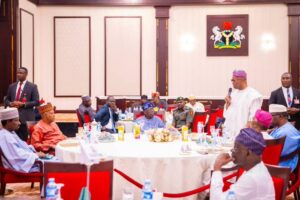

The Executive Chairman of the Nigeria Revenue Service (NRS), formerly the Federal Inland Revenue Service (FIRS), Dr. Zacch Adedeji, has said the recently implemented tax laws are designed to drive sustainable development and accelerate economic growth.
Adedeji stated this during a national television interview on Monday, noting that although tax reforms often generate political debate, their primary purpose is to stabilise the economy and strengthen institutions needed for long-term national development.
He rejected claims that the new tax framework could be deployed by the Federal Government to intimidate political opponents or single out individuals on the basis of political affiliation, stressing that the reforms are anchored on national interest and institutional responsibility.
Responding to concerns that the tax regime could be weaponised through selective enforcement or politically driven scrutiny, Adedeji described such fears as misplaced. He said the reform process is guided by transparency, due process and a deliberate effort to build credible institutions.
Addressing questions on whether the reforms could be used to suppress opposition voices, Adedeji said the administration deserved credit for pursuing difficult reforms despite the political climate.
“We need to commend the courage of Mr. President, that even though there is an election coming, he is courageous enough to continue on this path of statesmanship, not of that of politicians,” he said.
Read Also
READ ALSO: NASS Roll Out New Tax Laws
According to him, the government could have chosen to delay major fiscal and institutional changes ahead of an election cycle, but instead opted to strengthen the country’s fiscal base and improve economic governance.
He explained that the tax reform agenda is aimed at fixing structural deficiencies, promoting fairness and creating a simplified, predictable system that encourages voluntary compliance rather than enforcement driven by fear.
Adedeji said doubts expressed by some critics stem from Nigeria’s history and past perceptions of public institutions. However, he noted that the new framework is structured to minimise discretion in tax administration and ensure that operations are governed strictly by rules.
He added that the NRS is implementing systems that promote accountability, automation and stronger governance controls, ensuring that tax administration is guided by law rather than personal judgment or political influence.
The NRS Chairman emphasised that trust between government and taxpayers remains central to the reform process, noting that public confidence increases when citizens are assured that tax policies are free from partisan bias.
He said the administration is focused on expanding economic opportunities, strengthening public finances in a sustainable manner and ensuring that taxpayers can clearly see how revenue translates into improved public services.
Adedeji added that implementation of the reforms will continue in phases, with the goal of creating a tax system that supports investment, protects vulnerable groups and reinforces confidence in public institutions, while shielding tax administration from political interference.