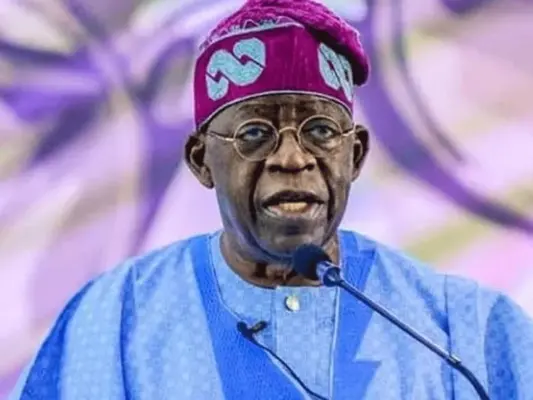
President Bola Ahmed Tinubu has hailed the legacy of former Head of State General Murtala Ramat Mohammed as a moral compass for Nigeria and the African continent, especially in the face of today’s political and economic crises.
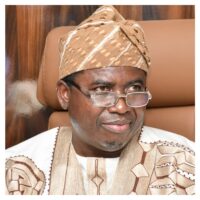
Tinubu spoke through the Secretary to the Government of the Federation (SGF), Senator George Akume, who represented him at the 50th memorial anniversary of the late military ruler.
The President said Mohammed’s courage, discipline and clarity of vision, even within his brief 201-day administration, earned him a permanent place among Nigeria’s most respected leaders and continues to inspire the continent five decades after his assassination.
He added that he accepted the role of Grand Patron of the memorial conference and book launch after receiving a letter from former President Olusegun Obasanjo, who chairs the Murtala Mohammed Foundation.
READ ALSO: Sanwo-Olu Attends Wreath-Laying Ceremony to Mark 50th Anniversary of Murtala Muhammed’s Death
In a statement issued on Friday by Yomi Odunuga, Special Adviser to the SGF on Media and Publicity, Tinubu said, “it has been 50 years since the assassination of General Murtala Mohammed. Today, this great leader, a remarkable son of Nigeria and Africa has summoned us to reflect on the state of our continent.”
Tinubu recalled Mohammed’s famous 1976 address in Addis Ababa at the Organisation of African Unity (OAU) meeting, where he declared that “Africa has come of age” and should no longer take orders from global powers. The President described this as a defining moment in Nigeria’s foreign policy.
He also referred to the 1970s as the golden era of Nigeria’s foreign policy, suggesting it could be dubbed the “Murtala Mohammed age”, due to the late leader’s influence and Africa-first stance during the Cold War.
Tinubu emphasized Mohammed’s commitment to African solutions for African problems, noting Nigeria’s support for liberation struggles in Angola and Mozambique, which reinforced the country’s role as a leading voice on the continent.
The President highlighted that Mohammed’s short tenure still produced transformative changes, including sweeping civil service reforms, the conceptualisation of the Federal Capital Territory (FCT), Abuja, and the initiation of a transition programme to civil rule.
Tinubu lamented that the leader’s tenure was cut short but urged African leaders to continue his ideals of accountable governance, conflict resolution, poverty reduction, improved education, and economic transformation through local resource value addition.
He stressed, “Africa will truly come of age when we create opportunities for our youth at home and ensure the welfare of our people.”
Tinubu concluded that honouring Mohammed’s memory requires renewed commitment to service, integrity and patriotism in pursuing the aspirations of Africa’s founding heroes.