The Federal Government has reassured Nigerians and the international community that its intensified fight against terrorism, including partnerships with foreign allies, will not undermine the nation’s economic stability.
Instead, authorities say the strategy is expected to bolster investor confidence and stimulate sustained growth by creating a safer environment for business and productivity.
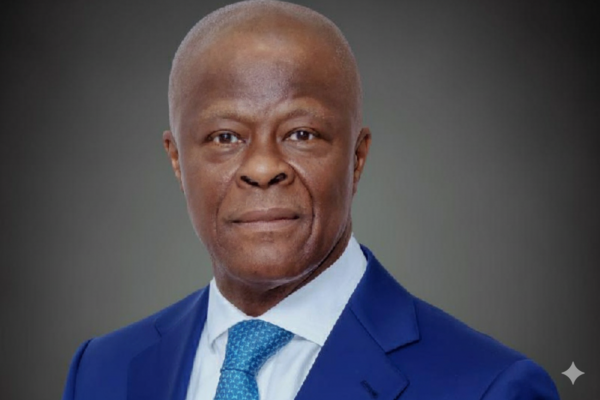
This assurance was given by the Minister of Finance and Coordinating Minister of the Economy, Mr. Wale Edun, who explained that Nigeria’s security engagements are structured to protect the economy rather than unsettle financial markets.
Edun’s comments followed concerns raised in some quarters over the joint operation carried out by Nigerian and United States forces against suspected terrorists in Sokoto State last Thursday.
READ ALSO: US Launches Airstrikes Against ISWAP In Sokoto State
He stressed that understanding the purpose and scope of the operation was essential to appreciating its broader economic significance, noting that it was aimed solely at neutralising threats to lives and economic activities.
While details of the outcome of the airstrikes remain unclear, Edun said the action had delivered a strong signal to terrorists and bandits operating in the region.
“What Nigeria is decisively confronting, alongside trusted international partners, is terrorism.
“This distinction is important, and it is fundamental to understanding the positive economic implications of recent actions,” Edun said.
According to him, the Sokoto mission was guided by intelligence and executed with precision, targeting only those elements endangering national security and livelihoods.
“Far from destabilising markets or weakening confidence, such actions strengthen the foundations of peace, protect productive communities, and reinforce the conditions required for sustainable growth.
“Security and economic stability are inseparable; every effort to safeguard Nigerians is, by definition, pro-growth and pro-investment,” Edun said.
The minister added that the Tinubu administration has made measurable progress in restoring security and implementing economic reforms, outcomes he said are already evident in recent macroeconomic data.
“In the third quarter of 2025, Nigeria recorded Gross Domestic Product (GDP) growth of 3.98 per cent, following a strong 4.23 per cent growth in the second quarter.
“We expect a stronger fourth quarter 2025 GDP performance.
“Inflation has decelerated for the seventh consecutive period and is now below 15 per cent, reflecting improving price stability and the effectiveness of coordinated fiscal and monetary actions,” Edun said.
He further noted that Nigeria’s financial system remains resilient, with both domestic and international debt markets functioning smoothly under disciplined fiscal management.
Edun also pointed to recent credit rating upgrades by Moody’s, Fitch and Standard & Poor’s as proof that global institutions are recognising the impact of government policies.
Read Also
“We have maintained fiscal discipline, prioritised efficiency, and protected macroeconomic stability, demonstrating resilience in the face of external shocks,” Edun said.
Recalling President Bola Ahmed Tinubu’s national address last week, the minister said the government’s focus for 2026 is to consolidate the gains of 2025 and deepen economic resilience.
“The actions we take today on security, reforms, and fiscal discipline are aligned with that goal.
“As markets reopen on Monday, 29 December 2025 (today), investors can be confident that Nigeria remains focused, reform-driven, and committed to stability.
“The fundamentals are strengthening, the policy direction is clear, and the resolve of this administration to protect lives, secure prosperity, and grow the economy is unwavering.
“Nigeria remains open for business, anchored in peace, and firmly focused on the future,” Edun said.
Market data appears to support the government’s optimism. The Nigerian stock market ended trading for the week before the Sokoto operation with a net capital gain of N953 billion, pushing its year-to-date return to 49.17 per cent, ranking among the top five globally.
Foreign investors have continued to show strong interest in Nigerian equities, with the latest foreign portfolio investment (FPI) report indicating a sharp rise in participation.
The share of FPIs in total market activity rose by about 479 basis points, while retained foreign funds this year are almost half of their total transactions for the whole of the previous year.
Foreign-to-domestic participation shifted from 15.98–84.02 per cent to 20.77–79.23 per cent, highlighting the growing influence of offshore investors.
This rising foreign interest, combined with steady local demand, has pushed total market turnover to a historic high of N10.54 trillion.
Figures from the Nigerian Exchange (NGX) show that transactions more than doubled within 11 months, climbing from N4.91 trillion in November 2024 to N10.54 trillion by November 2025.
FPI transactions alone surged by 178.8 per cent, from N785.28 billion to N2.189 trillion.
Foreign inflows rose sharply by 218.9 per cent from N370.15 billion to N1.18 trillion, while outflows increased at a slower pace of 142.89 per cent, from N415.13 billion to N1.001 trillion.
On the domestic front, investor confidence also strengthened, with total local transactions growing from N4.12 trillion to N8.35 trillion.
Retail investors raised their turnover from N2.11 trillion to N3.22 trillion, while institutional investors traded N5.13 trillion in 2025 compared with N2.02 trillion in 2024.
Meanwhile, inflation has continued its downward trend, easing for eight straight months to 14.45 per cent.
Nigeria’s GDP also recorded its strongest performance of the year in the third quarter, with growth of 3.46 per cent, driven largely by sustained expansion in the non-oil sector.