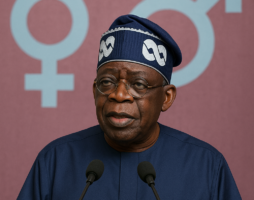

President Bola Ahmed Tinubu has hailed Nigeria’s 27 years of uninterrupted democratic governance, describing it as the longest stretch of civilian rule in the nation’s history.
Speaking during his Democracy Day address on Friday, the President said Nigerians have consistently chosen their leaders through the ballot since May 29, 1999, while political disagreements have largely been resolved through democratic institutions rather than violence.
Tinubu acknowledged that Nigeria’s democracy remains a work in progress but stressed the need to protect and strengthen it.
“Our democracy is not perfect, but it is ours, and we must continue to defend and strengthen it,” he said.
ADVERTISEMENT
The President also called for peaceful and credible governorship elections in Ekiti and Osun states, urging the Independent National Electoral Commission, security agencies and political parties to ensure transparent polls.
According to him, public confidence in the electoral process is essential for the survival of democracy.
READ ALSO: Democracy Day: Tinubu Confers National Honours on Babajide Kolade-Otitoju, Sam Omatseye, Olatunji Bello, Others
Tinubu further appealed to the National Assembly, judiciary, media and civil society organisations to continue playing their roles in safeguarding democratic governance.
“To our National Assembly, Judiciary, the Press, and Civil Society: you are the guardrails of our republic. Criticise me, disagree with me, but never stop believing in Nigeria,” he said.
Addressing young Nigerians, the President urged them to contribute to national development by building careers, businesses and innovations within the country.
ADVERTISEMENT
“Nigeria is your home and your future. Build here, code here, work here, and vote here,” he added.
Tinubu also commended members of the armed forces, police and intelligence community for their sacrifices in defending the country, while appreciating traditional rulers, religious leaders and community heads for supporting peace and reconciliation efforts.
Below are 20 Major Takeaways from Tinubu’s 2026 Democracy Day Address:
1. Tinubu Celebrates 27 Years of Uninterrupted Democracy
The President highlighted Nigeria’s longest period of civilian rule since 1999, describing democracy as imperfect but worth protecting and strengthening.
ADVERTISEMENT
2. Call for Credible Ekiti and Osun Elections
Tinubu urged the Independent National Electoral Commission (INEC), security agencies, and political parties to ensure peaceful and transparent governorship elections in Ekiti and Osun states.
3. Appeal to Youths to Build Nigeria
He encouraged young Nigerians to remain committed to the country by working, innovating, voting, and contributing to national development rather than seeking opportunities elsewhere.
4. Tribute to Democracy Heroes
ADVERTISEMENT
The President honoured pro-democracy activists and national figures, including MKO Abiola, Kudirat Abiola, Gani Fawehinmi, Beko Ransome-Kuti, Frank Kokori, Shehu Musa Yar’Adua, and others who fought for democratic governance.
5. Concern Over Abducted Schoolchildren
Tinubu expressed sadness over the kidnapping of children in Oyo and Borno states, pledging continued efforts to secure their release.
6. Security Tops Government Agenda
He announced that the administration has recruited over 50,000 police officers and thousands of military personnel while allocating a record N5.41 trillion to defence and security in the 2026 budget.
ADVERTISEMENT
7. Claims Major Gains Against Terrorism
According to the President, terror-related deaths have dropped by 81 per cent since 2015, over 13,000 terrorists were neutralised in the past year, and more than 124,000 insurgents and their dependents have surrendered through Operation Safe Corridor since 2023.
8. Warning to Terrorists, Bandits and Kidnappers
Tinubu issued a stern warning that criminals must either surrender or face the full force of the Nigerian state, stressing that no mercy would be shown to those threatening national security.
Read Also
9. Economic Freedom Identified as Next National Goal
ADVERTISEMENT
He argued that while the June 12 struggle secured political freedom, the current generation must secure economic freedom through prosperity, jobs, and improved living standards.
10. Defence of Economic Reforms
The President defended his administration’s reforms, saying they have improved fiscal stability, increased government revenues, reduced leakages, and restored investor confidence.
11. Boost in Non-Oil Exports and Investments
Tinubu disclosed that non-oil exports grew by 21 per cent in the last year, while investments increased across agriculture, energy, manufacturing, technology, mining, transportation, and creative industries.
ADVERTISEMENT
12. Progress Report on Electricity Sector Reforms
He cited the implementation of the Electricity Act, efforts to tackle the metering deficit, plans for a N4 trillion bond to clear sector debts, and expanded rural electrification projects.
13. Agriculture and Infrastructure Expansion
The administration plans to deploy 10,000 tractors over five years, while infrastructure projects nationwide are aimed at boosting productivity, employment, and market access.
14. Acknowledgement of Economic Hardship
ADVERTISEMENT
Despite positive economic indicators, Tinubu admitted that many Nigerians are still facing hardship and pledged to focus on reducing inflation, increasing food production, creating jobs, and improving living conditions.
15. Push for Local Government Autonomy
The President reiterated support for financial autonomy for the 774 local government councils, arguing that weak grassroots governance has contributed to insecurity and underdevelopment.
16. Renaming of Kaduna Institute After Yar’Adua
Tinubu announced the renaming of the completed Institute of Petroleum Studies in Kaduna as the General Shehu Musa Yar’Adua University of Geological Sciences and Engineering Technology in honour of the late Shehu Musa Yar’Adua.
ADVERTISEMENT
17. National Honours for June 12 Activists
The President unveiled a list of pro-democracy activists, journalists, politicians, and military officers who will receive national honours for their roles in the struggle against military rule.
Amongst those listed for the awards are:
Barrister Ayoka Lawani
2. Tunde Fagbenle
3. Oladele Alake
4. Olatunji Bello
5. Louis Odion
6. Segun Babatope
7. Sam Omatseye
8. Sir Ademola Osinubi
9. Bola Bolawole
10. Lade Bonuola
11. Femi Kusa
12. Debo Adeniran
13. Chief Ayo Opadokun
14. Chief Ralph Obiora
15. Ose Osayande
16. Barrister Osa Director
17. Prof. Sylvester Odion-Akhaine
18. Dr Arthur Nwankwo (Posthumous)
19. Dr Osagie Obayuwana
20. Dr Joe Okei-Odumakin
21. Barrister Titus Mann
22. Joe Igbokwe
23. Richard Akinnola
24. Ben Charles-Obi (Posthumous)
25. George Mbah
26. Dr Niran Malaolu
27. Major-General Ishola Williams (rtd)
28. Femi Aborisade
29. Jenkins Alumona
30. Gbemiga Ogunleye
31. Muyiwa Adekeye
32. Babajide Kolade-Otitoju
33. Ike Okonta
Military “Soldier-Democrats”
ADVERTISEMENT
Major General M.A. Garba
2. Brigadier General Lawal Jaafaru Isa
3. Colonel Umar Farouk Ahmed
4. Colonel Sambo Dasuki
5. Colonel Lawan Gwadabe
6. Brigadier General Jonathan Ndam Temlong
7. Colonel Musa Shehu
8. Major General Chris Eze
9. Major General Harris Dzarma
10. Colonel Isa Jibrin
11. Major General Joseph Oshanupin
12. Colonel Olusegun Oloruntoba (Olugbede of Gbede Kingdom)
13. Lieutenant Colonel Happy Kefas Bulus
14. Colonel J. Okai
15. Colonel Emmanuel Ndubueze
16. Lieutenant Colonel Yakubu Muazu
17. Brigadier General Yahaya Abubakar (Etsu Nupe, CFR)
18. Unity Message to Nigerians
Tinubu urged citizens to reject ethnic divisions and political blame games, insisting that insecurity and crime have no ethnic identity and that national unity remains essential to progress.
19. Democracy Must Deliver Economic Benefits
A key theme of the speech was that democracy should not be measured only by elections and political freedoms but by tangible improvements in the lives and incomes of ordinary Nigerians.
ADVERTISEMENT
20. Prosperity Defined as This Generation’s Mission
The President concluded that while previous generations secured independence and democracy, the responsibility of the present generation is to secure prosperity for all Nigerians.