The Federal Government has launched the Nigeria for Women Programme Scale-Up (NFWP-SU), a strategic investment initiative which is expected to target over 25 million Nigerian women nationwide.
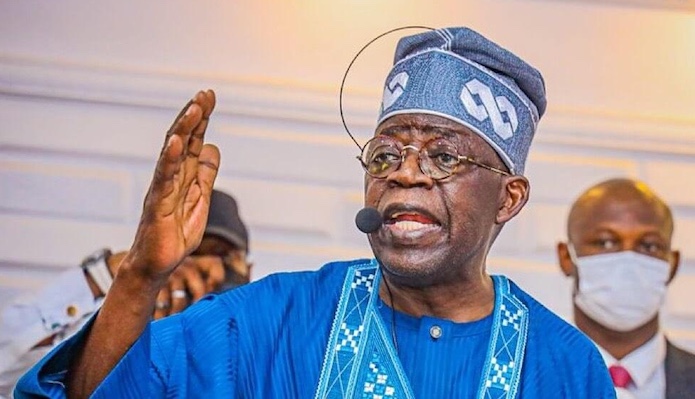
In a Friday statement made available to TVC News, President Bola Ahmed Tinubu on Tuesday inaugurated the NFWP-SU programme, declaring the initiative a strategic national investment and unveiling the government’s ambition to expand its reach to over 25 million Nigerian women across the country.
According to the statement, the President, represented by Vice President Kashim Shettima, said the scale-up marks a decisive shift in Nigeria’s development strategy, with women’s economic empowerment, family stability, and social development placed firmly at the centre of national growth.
He stressed that Nigeria cannot achieve sustainable prosperity while half of its population remains structurally constrained.
“Women are not peripheral to national development. They are central drivers of productivity, custodians of family stability, and indispensable partners in our ambition to build a resilient, competitive and prosperous nation,” the President said, noting that empowering women is essential to job creation, food security, financial inclusion and economic diversification under the Renewed Hope Agenda.
President Tinubu described the programme as more than a social intervention, calling it “a strategic investment in Nigeria’s economic infrastructure.”
He said the success of Phase I of the programme, which reached over one million beneficiaries across six states, provided strong evidence that structured, data-driven empowerment models deliver measurable, lasting impact.
Building on that evidence, the President announced a bold national ambition to scale the programme beyond its current targets to reach 25 million women nationwide, creating a sustainable platform for women’s economic inclusion embedded in federal, state and local systems.
He called on development partners, particularly the World Bank, to support the expansion through financing, technical assistance and innovation.
He also praised the Minister of Women Affairs and Social Development, Imaan Sulaiman Ibrahim, for what he described as disciplined leadership and purposeful reform, commending the ministry for activating its full mandate and reorganising social development into a coherent, accountable and technology-driven system.
According to the President, the integration of digital platforms such as the Happy Woman App, identity verification and transparent targeting reflects the administration’s insistence on measurable and verifiable public policy.
“The work of the Ministry has shown what focused execution can achieve. This is how public trust is rebuilt and how government resources reach real people with real impact,” he said.
Earlier, World Bank Country Director for Nigeria, Mathew Verghis, said the Bank was honoured to co-finance the NFWP-SU with the Federal and State Governments, describing it as fully aligned with the Bank’s new Country Partnership Framework for Nigeria, which prioritises unlocking economic opportunities, strengthening private sector linkages and creating more and better jobs.
Verghis noted that Nigerian women remain disproportionately affected by poverty, with 64.3 per cent living below the lower-middle-income poverty line, despite their critical contributions to agriculture, trade and enterprise.
He said the Women Affinity Group (WAG) model promoted under the programme has proven to be a powerful tool for lifting women out of poverty by enabling collective savings, access to credit, financial discipline and enterprise growth.
Citing examples from the field, he explained that over 28,000 WAGs currently empower about 600,000 women across Nigeria, allowing them to save together, lend responsibly, invest in businesses and transition into formal financial services.
He added that scaling such models could unlock enormous economic gains, noting estimates that reducing gender inequality could increase Nigeria’s annual GDP growth by more than 1.25 percentage points, while closing productivity gaps across key sectors could add nearly $23 billion to the economy.
“This is smart economics. When women thrive, communities grow stronger, and economies become more resilient,” Verghis said.
Also speaking at the event, Robert S. Chase, World Bank Practice Manager for Social Protection and Jobs, described the Nigeria for Women Programme Scale-Up as one of the most ambitious gender-focused social and economic interventions currently being implemented in Africa.
He said the programme reflects a strong partnership between Nigeria and the World Bank, anchored on evidence, innovation and a shared commitment to lifting millions of women out of poverty.
Chase noted that the programme’s strength lies in its ability to build sustainable systems rather than short-term relief, particularly through the Women Affinity Groups model, which combines social capital, financial inclusion and access to productive opportunities.
According to him, the scale-up phase demonstrates Nigeria’s readiness to institutionalise women’s empowerment as a core development strategy and not merely a welfare initiative.
The NFWP-SU Phase II is a $540 million programme, co-financed by the World Bank and the Federal and State Governments, expanding implementation to all 36 states and the Federal Capital Territory. It aims to directly reach five million women, generate about 4.5 million jobs, and benefit nearly 19.5 million Nigerians indirectly, while laying the groundwork for the broader expansion to 25 million women.
Under the leadership of Minister Imaan Sulaiman Ibrahim, the Ministry of Women Affairs and Social Development has positioned the programme as the centrepiece of wider social and economic reforms.
In Phase I alone, over 26,500 Women Affinity Groups were formed with more than 560,000 members, who collectively saved over ₦4.9 billion, expanded businesses, paid school fees and met household health needs.
The model has since attracted international interest, with other countries seeking to understudy Nigeria’s experience.
Beyond economic empowerment, the ministry has linked the programme to digital inclusion, civic identity, child protection and family welfare, while rolling out complementary initiatives in agribusiness, energy access, skills development and protection services.
With the official launch of the Nigeria for Women Programme Scale-Up, stakeholders agreed that Nigeria has moved closer to institutionalising women’s empowerment as a pillar of national development—transforming social investment into economic returns and positioning millions of women as drivers of growth, stability and shared prosperity.
The National Coordinator of the programme, Dr Hadiza Maina, continues to drive the process, advancing the interests of the Nigerian women.
Other speakers at the event were the representative of the Bill Gates Foundation, the representative of the Nigeria Governors’ Forum, while Senator Ireti Kingibe represented the Senate President, His Excellency, Godswill Akpabio, and other serving ministers like the Minister of Finance, Minister of Agriculture and others.
All state commissioners for women’s affairs were also present.