

The National Agency for the Prohibition of Trafficking in Persons (NAPTIP) is facing a wave of public scrutiny over its perceived ‘selective’ approach to high-profile investigations following the method deployed in cases regarding prominent Nigerian singers Simi and Speed Darlington over allegations of child molestation.
While the agency declared singer Speed Darlington wanted last year following a self-indictment statement of sexual misconduct, it has remained notably silent regarding resurfaced allegations against singer Simi.
The probe, which reportedly stems from a series of petitions regarding recent digital content and social media utterances, has polarised the Nigerian public.
While a section of the citizenry commends the agency’s proactive stance on child protection, a growing chorus of critics alleges a ‘selective’ approach to justice, accusing the anti-trafficking body of prioritising high-profile celebrity cases over systemic grassroots abuses.
Despite fans digging up past narratives where Simi allegedly detailed the molestation of minors at her mother’s daycare, NAPTIP’s failure to mention her or the facility in its latest public briefing has sparked allegations of institutional bias.
ADVERTISEMENT
This suspected disparity in treatment has ignited a fierce debate on whether the agency’s enforcement strategy is being applied equally to all entertainment figures, or only to those deemed easy targets.
Singer Simi
Singer and songwriter Simisola Kosoko, popularly known as Simi, has found herself at the centre of a polarising social media debate after she defended an alleged rape victim despite inconsistency in the evidence provided and condemned fans calling for the prosecution of false rape accusers.
The uproar stemmed from a heated debate following a viral video from a young woman detailing an alleged rape and shared evidence of stalking messages from her supposed attacker.
Critics escalated the controversy by circulating resurfaced posts from 2012, in which Simi detailed her time assisting at her mother’s daycare.
ADVERTISEMENT
These tweets have since become the basis for public petitions calling on NAPTIP to investigate the singer for alleged child molestation.
The old tweets from the singer, in which she detailed her experiences, now form what fans perceived as child molestation in her mother’s day care.
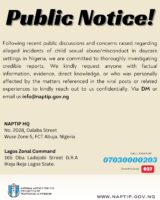
However, in a statement released on Tuesday, NAPTIP urged members of the public to provide factual evidence to aid its investigations into daycare misconduct. Notably, the agency refrained from naming any specific individual, a move that critics argue was a deliberate attempt to avoid mentioning Simi despite the viral nature of the allegations.
NAPTIP said, “We take all reports of child sexual abuse/misconduct seriously and are committed to investigating every credible claim. If you have factual information, evidence, or were directly affected, please reach out confidentially via DM or email info@naptip.gov.ng.”
Speed Darlington
ADVERTISEMENT
Popular Nigerian Hip Hop star Darlington Okoye, popularly known as Speed Darlington, reacted to the recent development, drawing comparisons between the agency’s response to Simi’s case and how he claimed he was treated in 2025 over what he described as a similar matter.
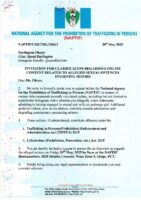
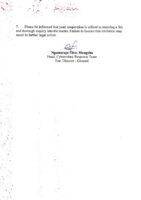
The rapper was declared wanted in June 2025 following a statement he made during a live session on his official Instagram account.

NAPTIP reacted to his statement and declared the singer wanted after public petitions calling for his arrest and prosecution.
ADVERTISEMENT
According to him, he was declared wanted at the time, suggesting that authorities acted more swiftly and publicly in his case.
Speed Darlington expanded his argument to a broader societal issue, alleging that crimes are often framed differently depending on gender.
“NAPTIP is it because she is a woman?” he wrote.
“As society evolved, crime titles somehow became masculine… kingpin, drug lord, cartel boss. But women commit the same crimes, too. You rarely hear ‘Queenpin’ or ‘cartel queen.’ Why is that?” he wrote.
“When a woman commits a crime, the narrative often shifts to sympathy. Why the double standard?” he asked.
ADVERTISEMENT
NAPTIP Faces Public Backlash
Nigerians have continued to criticise the agency over perceived double standards in its handling of the matter. Many have taken to social media to offer differing opinions, specifically pointing out the bias in the agency’s latest public statement compared to previous high-profile cases.
A social media critic, Cyborg Warlord (@Admiral_Cyborg), took to X to draw a sharp comparison between the cases of Simi and Speed Darlington.
He alleged that the disparity in NAPTIP’s approach stems from gender-based bias, accusing the agency of upholding a double standard because Simi is a woman.
According to his viral post, the agency’s refusal to apply the same ‘aggressive’ public labelling to Simi that it used for Darlington suggests a protective stance toward female high-profile figures.
ADVERTISEMENT
He wrote, “Speed Darlington made a video of himself talking about an imaginary scene. You people dragged him, and NAPTIP called for his possible arrest sef, without having any FACTUAL INFORMATION or EVIDENCE. It’s Simi’s turn, and her past tweets are a million times more incriminating than what Speed said, but NAPTIP is asking for FACTUAL INFORMATION or EVIDENCE. Even @naptipnigeria is an upholder of double standards, because a woman is involved.”
Similarly, another X user, Philip Defor (@Freshbankz), echoed these sentiments, observing that NAPTIP consistently adopts an aggressive posture in cases involving men while employing a significantly softer approach when dealing with women.
Defor’s comment, which has since gained traction, highlights a growing public perception that the agency’s enforcement tactics are influenced by the gender of the accused.
Defor wrote, “Naptip na una be the worst agency in Nigeria. You’re always against men. If na man write wetin Simi write una for don rush go arrest the man or declare him wanted. But Simi no because she is a woman and she is too big for una to arrest.”
ADVERTISEMENT