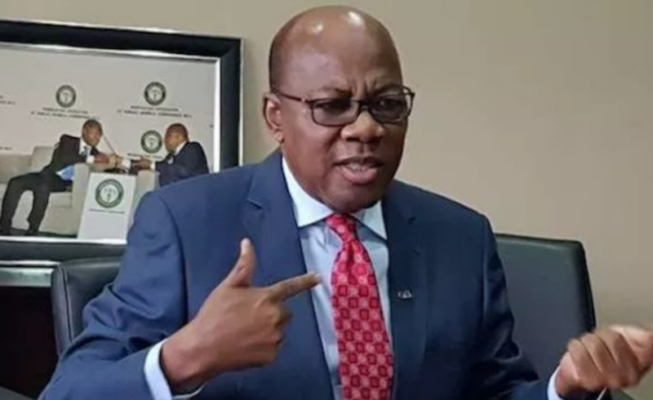
A Senior Advocate of Nigeria and former President of the Nigerian Bar Association (NBA), Olisa Agbakoba, has urged President Bola Tinubu to establish an electoral offences tribunal as recommended by the Electoral Reforms Panel chaired by Mohammed Uwais.
Speaking with reporters in Lagos on national issues, Agbakoba said the creation of a special court would curb electoral fraud, ensure speedy trial of offenders and restore public confidence in the ballot.
He argued that the burden of proof in election disputes should shift to the electoral umpire, the Independent National Electoral Commission (INEC), to demonstrate that elections were conducted in a free and fair manner, rather than placing the responsibility solely on petitioners.
Agbakoba commended President Tinubu for issuing Executive Order Nine, which directs the Nigerian National Petroleum Company Limited (NNPCL) to remit its revenues directly to the Federation Account Allocation Committee (FAAC).
The directive also removes the company’s revenue deduction powers as provided under the Petroleum Industry Act.
ADVERTISEMENT
Describing the order as a decisive move to align oil and gas revenue remittances with the 1999 Constitution, Agbakoba said the issue of whether an executive order can override legislation could be clarified by the Supreme Court.
He advised the Attorney-General of the Federation and Minister of Justice, Lateef Fagbemi (SAN), to seek judicial interpretation or consider amending the Act to reflect constitutional provisions.
He further suggested that the NNPCL should operate strictly as a commercial entity without regulatory or statutory powers, in line with global best practices.
On broader fiscal reforms, Agbakoba proposed the merger of the Nigeria Customs Service and the Nigeria Immigration Service into a unified ‘Border Force’, stressing that such agencies should not primarily function as revenue-generating bodies.
He recommended that revenue collection responsibilities be consolidated under the Federal Inland Revenue Service to improve transparency and accountability.
ADVERTISEMENT
The legal luminary also criticised opposition parties for what he described as a lack of issue-based politics and policy engagement, blaming them for internal defections and poor electoral performance.
He maintained that credible electoral processes would encourage more competent Nigerians to participate in politics and expressed optimism that Nigeria could attain a N1.5 quadrillion economy if its resources were effectively harnessed and revenue leakages addressed.